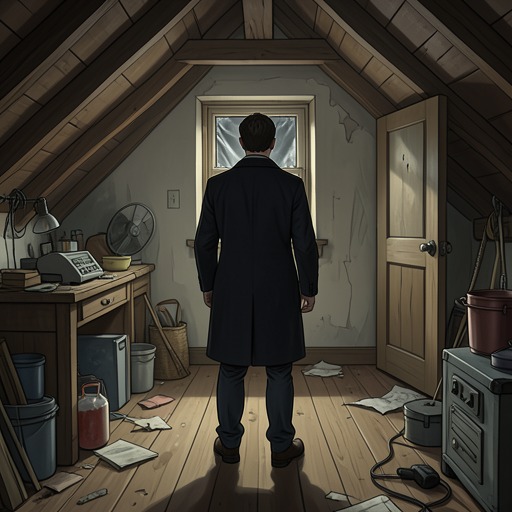
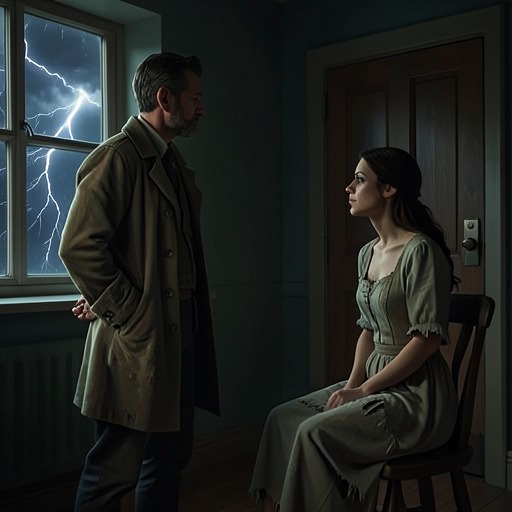
Nina’s captivity in the attic
The HousemaidNina’s captivity in the attic is not a single confinement but a recurring method by which Andrew Winchester controls her throughout their marriage. Its force comes from more than the locked room: unpredictable punishments, surveillance, and threats against Cecelia narrow Nina’s options until even an attempt to behave perfectly offers no safety. Later, when Andrew imprisons Millie Calloway, Nina recognizes the danger she has helped create and returns to the attic to get her out.
Pattern and Conditions of Captivity
Nina describes a marriage that has lasted seven years and a cycle in which Andrew sends her to the attic, on average, about once every other month. The intervals are unpredictable: sometimes the punishment comes more often, sometimes less, and once six months passed without a trip. The uncertainty is itself part of the ordeal. Nina never knows whether she will sleep in her own bed or on the attic’s uncomfortable cot, or what punishment Andrew has decided she deserves.
In one episode, Nina pounds on the door and scrapes at the wood until splinters lodge beneath her fingernails, then screams in the hope that neighbors will hear. After an hour, she gives up hope of attracting help. Andrew tells her the area below the attic is soundproofed, so even a dinner party downstairs would not hear her. The explanation turns her isolation into something deliberately engineered: her appeals cannot reach the people who might otherwise intervene.
Andrew’s control also reaches into the room through surveillance. When Nina challenges him about how he knows what she is doing, he says that he can see her and reveals that he has been watching her only for the past few weeks. Nina searches the walls for the concealed device, then demands to be let out. Andrew calmly tells her she is in no position to make demands, making clear that even her protest takes place on terms he controls.
Punishment Beyond the Attic
Nina tries multiple ways to escape the marriage. She bargains with Andrew, offering to leave with only Cecelia and the clothes she is wearing, but he laughs at the proposal. She knows her history of mental-health problems could let him portray her to police as a mother who had kidnapped Cecelia and might harm her again. That history, rather than helping her obtain protection, becomes a threat Andrew can use to undermine her credibility.
She also tries compliance. Nina cooks elaborate dinners, keeps the house spotless, and pretends not to feel repulsed during sex, hoping not to give Andrew a reason to send her upstairs. When being the perfect wife does not reduce the punishments, she changes tactics: she snaps at him, stops exercising, and eats what she wants in the hope that he will lose interest. Instead, after he catches her eating chocolate cake, he takes her to the attic and starves her for two days. Neither obedience nor defiance gives her reliable control over when the next punishment will come.
The system also uses Cecelia to discipline Nina. Andrew buys Cecelia itchy, frilly dresses she dislikes and that other children mock. Cecelia wears them and tries not to get them dirty because she understands that otherwise her mother may disappear for days. Nina fears Andrew may eventually punish her daughter directly, but accepts punishment herself while that prevents Cecelia from becoming the target.
Andrew makes the threat explicit by connecting Nina’s efforts to leave with consequences for Cecelia. He has already nearly drowned the girl, and he keeps peanut butter in the pantry despite knowing Cecelia is allergic. Nina repeatedly throws it away, only for it to reappear; Andrew sometimes puts a little in Cecelia’s dinner, causing welts and an uncomfortable rash. The attic’s discipline therefore extends outside its walls: the possibility of Nina’s confinement helps make Cecelia comply, while Cecelia’s safety helps keep Nina from leaving.
From Captive to Planner
Nina’s later plan for Millie grows out of her own experience of being unable to escape Andrew. She first engineers Millie’s place as her replacement and later hopes Millie will kill him. In preparing for that possibility, Nina leaves Millie pepper spray and the attic-room key. She admits to herself that she had not fully thought through what would happen if Millie were actually trapped there.
When Nina realizes Millie may be locked in the attic, the possibility becomes a reversal of their former positions. Nina climbs the fourteen steps to the landing and sees light beneath the door of the room where she herself spent so many terrible days. She tells Millie she is coming to help, takes the key from her purse, and unlocks the door. Nina blames herself for leaving Millie in danger and for assuming that Millie was stronger than she had been; her memory of captivity now directs her toward intervention rather than escape alone.
Aftermath and Significance
After Andrew’s death, Nina’s captivity remains relevant to the question of responsibility. Enzo offers to testify that Andrew locked her in the attic and that he witnessed it. Nina recognizes that his testimony could help establish what Andrew did, but also worries that he will be presented as her secret lover, a relationship she cannot deny. Her history of confinement is thus both evidence of Andrew’s abuse and a story whose credibility may be challenged through her personal life.
The recurring attic punishment shows how Andrew’s power depends on a network of control rather than a locked door alone: isolation, uncertain sanctions, surveillance, threats to Nina’s standing with the police, and pressure exerted through Cecelia all reinforce one another. Nina’s return to the attic for Millie gives that history a further consequence. Having once been unable to make the house hear her, she now recognizes another woman’s confinement and uses the key she has to open the door.